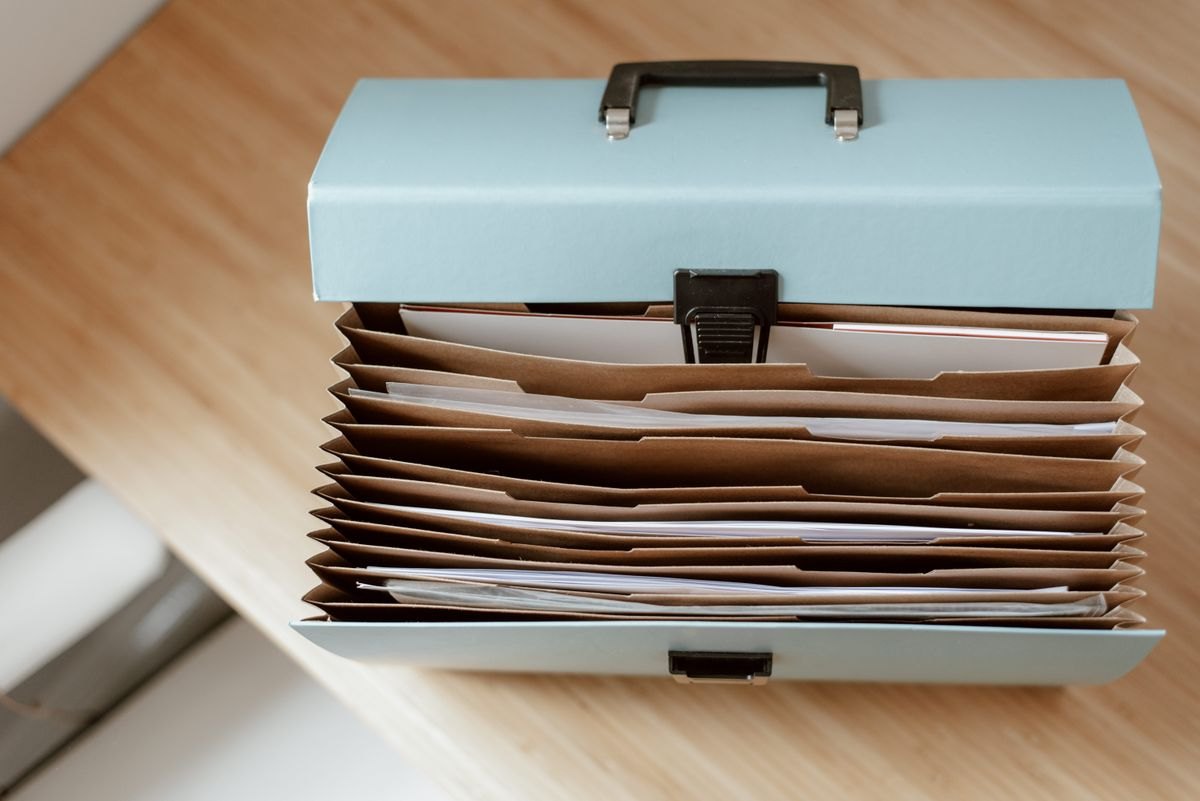
Pregnancy paperwork can include appointment letters, test information, benefit forms and notes from conversations. Carrying every page everywhere makes the important items harder to find. Ask your clinic or birth facility what you should bring, then build a small working set around those requirements.
Give paper three destinations
Keep current visit documents in one pouch: the information requested for the next appointment, your question note and any directions or arrival details. Put documents that require action in a separate place at home, with the next step written on a removable note. File completed information away so it does not keep returning to the active pile.
If you use digital copies, make sure you can open them when needed. Check whether a document requires an internet connection or a login you rarely use. A printed copy of essential arrival information may be simpler than troubleshooting an account at reception. Do not assume a photograph will be accepted in place of an original document; ask the receiving organization.
Keep your own notes distinct
Label a personal summary as your note, with the date of the conversation. It should not look like an official instruction or replace the original document. If you record something uncertain, mark it as a question to confirm rather than silently filling the gap from memory.
Share only what a helper needs. A driver may need an address and appointment time, not the clinical paperwork inside the same folder. A birth companion may need access to your preference note but not unrelated financial documents. Separate pouches or digital folders make these boundaries easier to maintain.
At the end of an appointment, put new papers into the same working pouch rather than a coat pocket. When you get home, identify any action before filing them. If a form needs a signature or another person's information, arrange that step while its purpose is still clear.
Use a brief weekly check to remove duplicates and outdated versions. Shred or otherwise dispose of sensitive papers appropriately rather than leaving them in household recycling intact. You do not need a complicated filing system; you need to know which document is current, where it belongs and whether it asks you to do something.