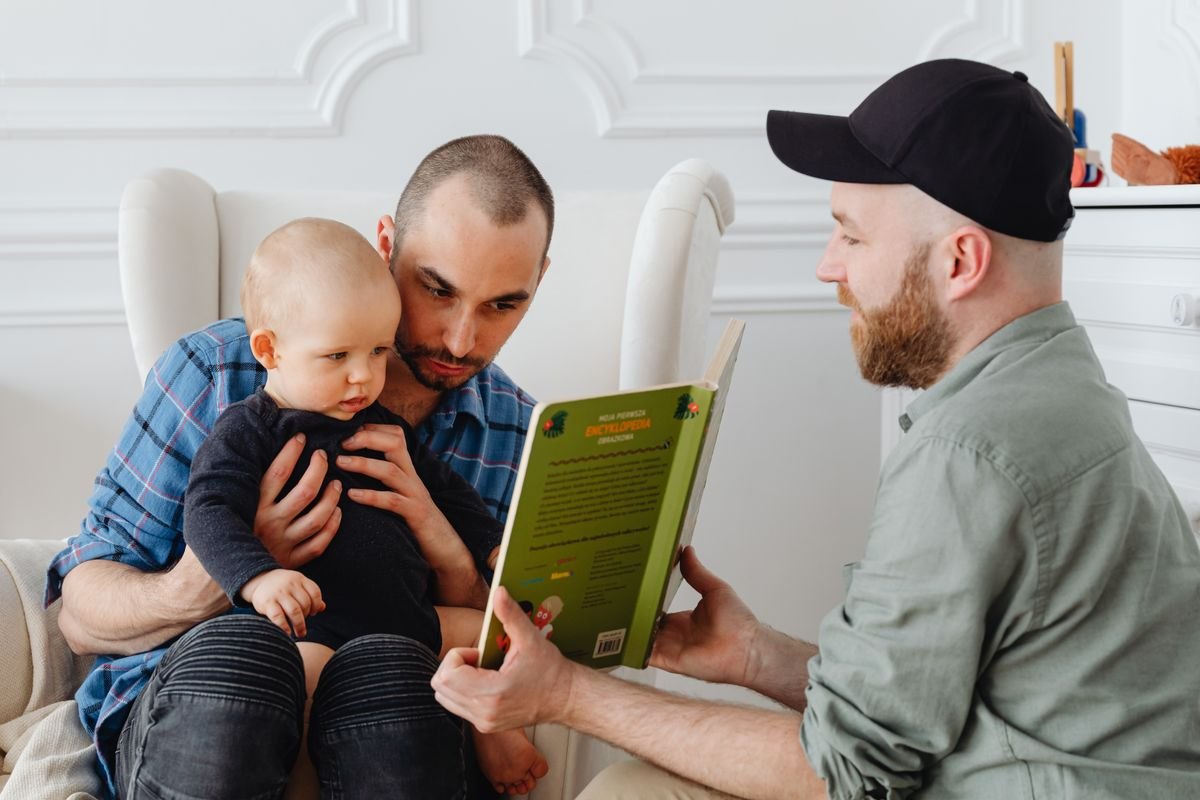
An LGBTQ+ family may find that forms, classes or well-meaning helpers assume a mother-and-father arrangement that does not describe them. Start with the information the family wants used: names, pronouns, parent titles, who is involved and what each person's role will be. No one should have to explain their entire family history to arrange a meal delivery or ask about a class.
Let each person describe their role
Ask who wants to be included in support conversations and how they should be introduced. A non-birthing parent may be a primary caregiver, and a close support person may not be a partner. Do not infer caregiving responsibility, feeding plans or decision-making authority from appearance, gender or a family label.
For clinical, administrative or legal questions, ask the relevant service what information or documentation it requires. A household support plan does not establish legal parentage or substitute for a provider's consent process. Where a form does not fit the family's circumstances, request guidance from the organization rather than guessing which box to use.
Agree what helpers need to know
A friend doing school pickup needs the authorized arrangement and the child's routine. They do not need information about conception or fertility treatment. A visitor bringing dinner needs dietary details, not an explanation of which parent is genetically related to the baby. Share information according to the task.
Discuss privacy before relatives or helpers introduce the family to others. Ask which names and relationships may be shared, and whether any information should remain within a small group. Coming out to one person or in one setting does not mean someone wants the same information circulated everywhere.
If a helper makes an incorrect assumption, a short correction may be enough: 'We both use the title parent,' or 'Please use this name.' The family should decide how much explanation they want to give. Another trusted person can help reinforce an agreed correction so it does not always fall to the same parent.
Ask services concrete questions
When comparing a class or support service, ask how partners and other support people are included, what language is used in materials and how private information is handled. A general claim of welcome is less informative than a clear answer about the actual experience.
If a particular accommodation or approach matters, describe it specifically. You might ask whether forms allow the family titles you use, whether a companion can attend or whether a private conversation is available. Confirm the response with the organization providing the service rather than relying on another family's experience.
Divide household work without importing stereotypes
Assign tasks according to availability, recovery needs, preferences and skills. Avoid assuming that one parent naturally knows more about baby care or should manage family communication. Give each person room to learn and take responsibility for complete jobs.
Make a support map that includes chosen family as well as relatives, where wanted. Record what each person has agreed to do, not simply their relationship to the parents. A neighbour who reliably brings groceries may be more available for that task than a relative who lives far away.
Review the arrangement after the baby arrives. Keep the words and roles current as the family requests, and address a specific problem when it appears. Support becomes usable when people can ask for what they need without first correcting a set of assumptions about who they are.
Give helpers language they can use without speaking for you
If you want a trusted person to correct a repeated assumption, tell them the words you prefer. They might say, 'These are the parent titles the family uses,' and then return to the task. They should not disclose personal history as an explanation or make the family's identity the centre of every introduction.
A family member may be supportive in private but hesitant to use the agreed language in a group. Address that concrete behaviour before a larger gathering if possible. Explain what you are asking them to do, rather than relying on a general promise of support. If you do not want a discussion during a visit, the helper can reinforce that boundary too.